







Blog de la iglesia
Passion Church Blog

Before we talk about who God is, I want to invite you to pause and open your heart. We all bring something into conversations about God: • childhood experiences • past church wounds • cultural assumptions • religious confusion • parental mistreatment • or even silence about God For many, the very word “God” carries layers of misunderstanding. So as we explore this doctrine, I’m asking you to do three things: 1. Lay down past assumptions. Not every idea you were taught about God was accurate. 2. Allow Scripture to speak clearly. We are approaching this biblically—not through wounds, fears, or culture. 3. Give grace to your own story and the stories of others. Many people struggle with their view of God. You’re not alone. My goal is not to overwhelm you with theology. My goal is to help you see God clearly, love Him deeply, and trust Him fully. Now, let’s walk together through who God reveals Himself to be. ________________________________________ 1. God Is Creator — The Beginning of Everything Begins With Him The Bible opens with a bold, simple declaration: “In the beginning, God created the heavens and the earth.” — Genesis 1:1 And honestly, I find it a little humorous how people often present the two major views of how everything began. On one hand, you have the Big Bang: An invisible, unexplainable force that made something out of nothing. On the other hand, you have God: An invisible, eternal Being who made something out of nothing. When you put them side by side, it’s almost funny. In both cases, a cause outside the visible universe sparks life into existence. Both require faith. Both ask us to believe in something we can’t physically observe. The real question isn’t whether an invisible cause started everything. The real question is Who or what that cause is. Some say the universe exploded into existence with no personal intent or meaning. Christians believe the universe was spoken into existence by a personal God filled with purpose, creativity, and love. And here’s the irony: Even the Big Bang—a sudden burst of light and energy—sounds very similar to “Let there be light.” It just depends on how you view it. Many scientists now affirm the universe had a beginning— that time, space, and matter came into existence suddenly, and that the cause must exist outside of all three. That sounds a whole lot like God. Science often describes how things work. The Bible reveals Who made them work— and why He made them at all. God didn’t create because He needed anything. He created because He is overflowing with love, creativity, and purpose. You are not an accident. You are not random. You were created intentionally by a God who knows you and loves you. ________________________________________ 2. God Is Eternal — Unchanging, Unbound by Time, Always Present Psalm 90:2 says: “From everlasting to everlasting, You are God.” God existed before the universe. He exists beyond time. He does not age, weaken, or evolve. He is not learning or adjusting. He simply is. When Moses asked for His name, God responded: “I AM WHO I AM.” — Exodus 3:14 Not “I was.” Not “I will be.” Just I AM—constant, faithful, ever-present. This matters because: • Feelings change. • People change. • Circumstances change. • Cultures change. God does not. The God who spoke in Genesis is the same God listening to your prayers today. You can build your life on a God who never shifts. ________________________________________ 3. God Is Father — Loving, Protecting, Guiding, and Caring for His Children When Jesus taught His disciples to pray, He didn’t say: • “Our Judge…” • “Our Creator…” • “Our King…” He said: “Our Father…” — Matthew 6:9 Jesus intentionally revealed the heart of God as a Father— not distant, cold, or harsh, but relational, present, deeply loving. But for many people, the word “father” is complicated. If your earthly father: • abandoned you, • criticized you, • abused you, • ignored you, • or failed to protect you, then seeing God as Father may feel painful or impossible. Here is the truth you need to hear: God is not the reflection of your earthly father. He is the perfection of fatherhood. Scripture reveals that God is a Father who: • Loves His children (1 John 3:1) • Protects them (Psalm 46:1) • Provides for them (Matthew 6:31–32) • Guides them (Psalm 23) • Disciplines them out of love (Heb. 12:6) • Delights in them (Zeph. 3:17) He is the Father who runs to the prodigal, not away. The Father who carries His children when they are weak. The Father who fights for His family. The Father who never leaves, never wounds, never abuses, never manipulates. He is the Father your soul was created for. ________________________________________ 4. God Is Triune — One God in Three Persons We believe in one God who exists eternally as: • Father • Son • Holy Spirit Not three gods. Not one God wearing three masks. Not one God shifting between roles. One Being. Three Persons. Perfect unity. Why does this matter? 1. God has always been relational. Love existed before creation within the Trinity. 2. God models unity and partnership. The Father plans, the Son accomplishes, the Spirit empowers. 3. The Trinity reveals the depth of God’s love. The Father sends. The Son sacrifices. The Spirit transforms. The Trinity isn’t a puzzle. It’s a beautiful mystery that shows us God’s relational, united, and loving heart. ________________________________________ 5. God Is Sovereign — Fully in Control, Completely Good Sovereignty does not mean: • God forces human choices • God removes free will • God causes evil • God micromanages every detail Sovereignty means: • God’s authority is absolute • God’s plans are unstoppable • God is never surprised • God is never defeated • God works all things for the good of His people God’s sovereignty isn’t about control— it’s about trustworthiness. He is powerful enough to rule creation and tender enough to walk with you through pain. ________________________________________ 6. God Is the Giver of Free Will — The Gift That Makes Love Possible Free will is one of God’s greatest gifts—second only to grace. Why? Because love cannot exist without choice. If God forced obedience, forced worship, forced devotion— it wouldn’t be love. So God gave humanity the ability to: • obey or disobey, • pursue Him or reject Him, • choose good or choose evil, • forgive or stay bitter, • love or hurt, • move toward God or away from Him. This gift is beautiful… and dangerous. It is the foundation for: • every act of kindness • every act of evil • every moment of worship • every moment of rebellion Free will explains why beauty exists and why brokenness exists. You are not a robot. You are a person God loves— a person capable of choosing Him freely. God’s sovereignty and human free will do not compete. They work in perfect tension. God’s will is ultimate. Your choices are meaningful. Together, they shape your life and your relationship with God. ________________________________________ 7. God Is Good — Perfect in Character, Perfect in Love Everything God does flows from His goodness. He cannot: • lie • manipulate • harm • betray • act out of evil He is holy, just, patient, merciful, gracious, and loving. If anything in your life contradicts His goodness, it did not come from Him. ________________________________________ 8. Why Understanding God Matters for Everyday Life If God is Creator — your life has purpose. If God is Father — you are loved and safe. If God is Eternal — He is your anchor. If God is Triune — you were designed for community. If God is Sovereign — you can trust Him. If God gives free will — your choices matter. If God is good — you can run to Him, not from Him. Your entire worldview rises or falls on who you believe God is. ________________________________________ 9. Don’t Just Take My Word for It — Explore Him Yourself Read these Scriptures this week: • Genesis 1 • Psalm 23 • Psalm 90 • Matthew 6 • Luke 15 • John 14–17 • Romans 8 • 1 John 3–4 Ask God to reveal Himself to you as: • Creator • Father • Sovereign • Good • Present Don’t quit when Scripture stretches you. Lean in. Ask questions. Search. God loves revealing Himself to those who seek Him. ________________________________________ 10. Final Thought: The Way You See God Shapes the Way You Live If you believe God is distant, you will feel alone. If you believe He is harsh, you will hide. If you believe He is controlling, you will resist. If you believe He is passive, you will feel abandoned. But if you believe He is: • Creator • Eternal • Triune • Father • Sovereign • Good • Loving • Wise • Present …then everything about your life changes. Your identity changes. Your peace changes. Your purpose changes. Your relationships change. Your decisions change. Your worship changes. Who God is determines who you become. Anchor your life to the God who created you, loves you, redeemed you, empowers you, guides you, and walks with you every step of the way.

If you’ve ever searched “ church near me in Kernersville ,” “ churches in Kernersville NC ,” or “ non-denominational church near me ,” you may have noticed something right away — there are a lot of churches in this area. At first, some people wonder if there are too many churches in Kernersville and the Piedmont Triad. But when you step back and look at the population, the attendance trends, and the mission of the Church, the truth becomes clear: Having many churches isn’t a problem — it’s a blessing. The Piedmont Triad: A Massive Mission Field The Piedmont Triad region of North Carolina — including Kernersville, Greensboro, Winston-Salem, High Point, and surrounding communities — is home to approximately 1.7 million people. That’s 1.7 million lives. 1.7 million stories. 1.7 million people with spiritual questions, needs, and hopes. Across the Triad, there are hundreds of churches — traditional, contemporary, denominational, and non-denominational. Using a generous estimate of 300 churches, the math becomes eye-opening. If the entire population were evenly divided, each church would need to serve more than 5,600 people for everyone to be introduced to Jesus, discipled, and cared for. That reality alone shows us something important: The Triad doesn’t have too many churches — it has too many people still unreached. What Attendance Numbers Reveal When we look at church size across the United States, the picture becomes even clearer. • The average church’s Sunday attendance is around 65 people • The median church size is closer to 60 people That means half of all churches have 60 or fewer people attending on a typical Sunday. If we apply that reality locally: • 300 churches × 65 people = 19,500 weekly attenders • Out of 1.7 million people, that means over 98% are not in church on any given Sunday So while there may be many churches in Kernersville and the Triad, the vast majority of people remain unchurched or disconnected from a faith community. Why Having Many Churches Is Actually the Solution Churches aren’t businesses competing for customers. They are local expressions of God’s love, placed intentionally in different communities, cultures, and contexts. People searching for: • “ church near me in Kernersville .” • “ friendly churches in Kernersville NC .” • “ non-denominational churches in Kernersville .” …aren’t just searching for a service time. They’re searching for belonging. And belonging looks different for different people. How Small, Medium, and Large Churches Work Together to Reach More People God never designed the Church to be one-size-fits-all. The diversity of churches in Kernersville and the Triad exists because different churches reach different people — not in competition, but in cooperation. Small Churches: Deep Relationships & Personal Discipleship Small churches often excel at: • Personal care • Strong relationships • Deep discipleship They are especially effective at reaching people who: • Value a close community • Have been hurt by the church in the past • Prefer relational environments • Want to be known by name For many searching “church near me in Kernersville,” a smaller church feels safe and approachable. Medium Churches: Community With Momentum Medium-sized churches balance: • Relational connection • Growing ministries • Leadership development • Outreach and vision They often reach: • Young families • Growing believers • People ready to serve and lead Passion Church in Kernersville fits naturally in this space — offering passionate worship, biblical teaching, a strong kids ministry, and a welcoming environment while remaining deeply relational and fast-growing. Large Churches: Visibility & Broad Reach Large churches provide: • High visibility • First entry points for seekers • Large-scale outreach and missions They often introduce people to Jesus who may later find their long-term home in another local church. This isn’t loss — it’s Kingdom multiplication. Different People Reach Different People God uses diversity intentionally. Different backgrounds. Different testimonies. Different cultures. Different life stories. A church filled with young families will reach young families. A church with powerful recovery testimonies will reach those still struggling. A church built around questions will reach seekers. When churches embrace their unique calling, more people meet Jesus in a way they can relate to. One Mission, Many Expressions There is: • One Church • One Gospel • One mission “Go and make disciples of all nations.” — Matthew 28:19 Some churches plant. Some water. Some harvest. But God brings the growth. When churches across Kernersville and the Piedmont Triad celebrate one another, the community wins — and lives are changed. Why This Matters for Kernersville Kernersville is growing rapidly, and people moving here are actively searching for: • Community • Purpose • Spiritual grounding That’s why having multiple churches in Kernersville NC, including non-denominational churches, is not redundancy — it’s readiness. Looking for a Local, Fast-Growing Non-Denominational Church? If you’re searching for: • A church near me in Kernersville • A friendly, fast-growing non-denominational church • A place where your family can belong and grow • A church that teaches the Bible clearly and passionately We invite you to visit Passion Church in Kernersville. Want To Know More About Passion Church? Passion Church exists to help people: • Know God • Find freedom • Discover purpose • Make a difference In just a short time, Passion Church has grown from 87 people to over 200 weekly attenders, celebrated baptisms, and seen lives transformed by Jesus — and we believe God is just getting started. Service Times 🕘 Sundays at 9:00 AM & 11:00 AM Location 📍 Kernersville, North Carolina Contact Information 🌐 Website: www.passionchurchnc.com 📧 Email: info@passionchurchnc.com Whether you’re new to faith, returning after time away, or simply searching for a church that feels like home, there’s a place for you at Passion Church. The Bottom Line The Triad doesn’t have too many churches. It has: • Too many people still searching • Too many families needing hope • Too many hearts waiting to be reached And that’s precisely why every church matters. Together — small, medium, and large — churches across Kernersville and the Piedmont Triad are working toward the same goal: 👉 Introducing people to Jesus and walking with them as their lives are transformed.

Before we talk about biblical submission, I want to ask something of you — something that might feel uncomfortable, but I believe it’s necessary. Please don’t jump to conclusions halfway through this blog. This subject carries a lot of history — some beautiful, some painful, and some deeply distorted. For many people, submission has been misused, Scripture has been weaponized, authority has been abused, and relationships have been harmed rather than healed. Some of you reading this carry real wounds from past experiences. Wounds from churches. Wounds from relationships. Wounds from people who claimed “biblical authority” while doing things God never endorsed. I want you to hear this clearly: my goal is not to reopen those wounds. My goal is to bring clarity, healing, truth, unity, and grace — not division. So as we walk through this topic, I’m asking you to do three things: Lay down bias — both positive and negative. Not every man is controlling. Not every woman is rebellious. Not every marriage abuse story reflects God’s design. Not every tradition was right. Not every “new idea” is wrong. Please release past distortions and listen to Scripture itself. We’re not approaching this through cultural stereotypes, abusive patterns, patriarchal extremes, modern overcorrections, or personal preferences. We’re approaching it biblically — with open hearts. Give space for grace — for yourself and for others. Whether you’ve been hurt, confused, defensive, or unsure about submission… breathe. Let God speak with clarity, not culture with noise. I am writing this not to control anyone, but to educate, not to pressure anyone, but to bring truth, not to condemn anyone, but to bring healing, not to assign blame, but to bring unity. My heart is that we walk away with: a biblical understanding, deeper mutual respect, clarity on what God actually intended, and grace for one another’s stories. Keep in mind, we are talking about this subject in the context of marriage. This is not a commentary on the structure of society, the church, the workplace, or any other situation. Now — with gentleness, honesty, and open hearts — let’s explore what the Bible really says about submission. 1. Biblical Submission Begins With Mutual Submission (Ephesians 5:21) This is important to start with because people get so bent out of shape about one person submitting more or less than the other. Before Paul says anything about husbands or wives, he begins with a command to everyone: “Submit to one another out of reverence for Christ.” — Ephesians 5:21 This matters. We often hear submission talked about as if it is something only women do, or as something nasty and demeaning. But Scripture teaches that every follower of Jesus is called to a posture of humility and submission toward others. God holds both men and women to high standards of humility, service, love, honor, and Christlike character. Too often, people pick one or two verses to support their viewpoint without considering the entire passage, the entire story of Scripture, the balance of responsibility, or the mutuality God designed. We cannot say, “Women should submit,” while ignoring all the times Scripture calls men to submit to God, to sacrificial love, to humility, and to putting their wives above their own desires. Likewise, we cannot deny that mutual submission — both spouses living humbly and honoring one another under Christ — is the only way a biblical relationship thrives and reflects Jesus. Remember the beginning of Scripture: God did not say it was “not good” for man to be alone because he needed someone to control. He said it because he needed a helper/partner — someone who fills in the gaps, complements him, strengthens him, and stands beside him with equal value and worth. In return for that partnership, the support, the helpmate, his job is to protect her, put her needs above his own, and beyond. The Bible is clear: submission is a shared calling — not a gendered punishment. 2. Men Are Called to Submit Too The Bible never tells men to force or demand submission from their wives. It tells them to submit to Christ, to obey God, and to imitate Jesus’ sacrificial love. Scripture says: “Husbands, love your wives, just as Christ loved the church and gave Himself up for her.” — Ephesians 5:25 A man cannot lead biblically unless he is submitted to Christ. If he is not walking in humility, obedience, self-sacrifice, and servant-hearted leadership, then he is not fulfilling his God-given role. Biblical leadership is not about superiority. It is about serving first. And the ultimate model for men is Jesus Himself. 3. Jesus Shows Us What Submission Truly Looks Like If you want to understand biblical submission, look at Jesus. He submitted to the will of the Father out of love, respect, trust, unity, and devotion. He went places He didn’t want to go. He endured suffering He didn’t deserve. He obeyed commands that were costly to fulfill to advance a shared mission. He prayed, “Not my will, but Yours be done.” Jesus proves something essential: submission is not weakness. Submission is a strength. Submission is love in action. And if Jesus — the Son of God — lived a submitted life, then submission cannot be about inferiority. It is about relationship and purpose. 4. What “Wives, Submit to Your Husbands” Actually Means This verse has been misinterpreted, misused, and weaponized in ways that do not reflect God’s heart. So let’s look closely at the original language Paul used. The word translated “submit” in Ephesians 5:22 is the Greek word: ὑποτάσσω — hupotassō (hoo-pah-TASS-oh) This word does not mean blind obedience, control, silence, or forced compliance. It carries the ideas of: Voluntarily aligning with, supporting a shared mission, partnering with, honoring leadership, creating unity, and offering strength. It is a relationship word, not often a power word. When Greek writers wanted to express “obey,” they often used a different word: ὑπακούω — hupakouō That word is commonly used for children obeying parents, servants obeying masters, and believers obeying God. Paul does not use that word for wives. Why? Because he is not describing a master/slave relationship. He is describing a voluntary, relational partnership — a posture of ordered unity. This matches perfectly with the woman described in Proverbs 31: strong, wise, resourceful, hardworking, godly, respected by her community, and clearly not passive or powerless. Her strength honors her husband and builds her family; it does not diminish her. A wife’s biblical submission is: offered freely, rooted in love, anchored in mutual respect, tied to the husband’s submission to Christ and her, and always aligned with God’s will. Submission is not weakness — it is a strength expressed by both partners through unity. And remember: Jesus Himself lived a life of submission to the Father — not out of inferiority, but out of love and purpose. Biblical submission calls husbands and wives to reflect that kind of Christlike humility — not to suffer under control. 5. The Big Question: “Does This Mean a Woman Must Obey Her Husband Without Question?” Absolutely not. The Bible does not say: “Wives, blindly obey your husbands.” “Husbands rule your wives.” “Women have no voice.” A wife is called to submit as unto Christ — meaning she honors her husband’s spiritual leadership when he is following Christ. She is never commanded to: follow him into sin, tolerate abuse, surrender her identity, or abandon her God-given wisdom and calling. Submission is not control. Submission is not coercion. Submission is not demanded — it is chosen. If a husband, or either spouse for that matter, demands submission, they already misunderstand it. 6. Biblical Marriage: Equal Value, Distinct Callings — And What That Doesn’t Mean Let’s make something very clear: some of the things people say today in the name of “biblical” marriage are nowhere in Scripture. Statements like: “My wife has to ask my permission to spend money.” “She needs my permission to leave the house.” “She has sex with me whenever I want.” “She submits, I lead — end of story.” Personally, I have heard all these statements from both parties in a marriage, and none of these reflect God’s design. Not one. These are distortions, not doctrines. The Bible does not call husbands to treat wives like children. It does not diminish a woman’s autonomy or personhood. It does not give men “final say” on every household detail. From a man's point of view, Guys, we need to realize God did not give men a servant. He gave us a partner. A God-Honoring Marriage Looks Like This: The spouse who is stronger at finances manages the money in a respectful, God-honoring way. The spouse who is the better communicator handles communication. The spouse who is the stronger provider provides. The spouse who is the more natural nurturer nurtures. These are expressions of giftings, not gender stereotypes. Marriage thrives when each person does what God has gifted them to do — for the good of the whole home. And even when one spouse leads in a practical area through gifting, decisions are still made in unity, through prayer, and with mutual honor. What Spiritual Headship Really Means (And the Greek Word Behind It) The one role Scripture consistently gives uniquely to husbands is spiritual headship. Paul writes: “For the husband is the head (κεφαλή — kephalē) of the wife as Christ is the head (kephalē) of the church.” — Ephesians 5:23 The Greek word kephalē carries the idea of head/leader with responsibility — like Christ’s headship of the church — expressed through sacrificial love, initiative, and care. It does not mean: dictator, boss, ruler, or automatic final decision-maker on all earthly matters. Spiritual headship means: A husband leads the way spiritually. He takes responsibility for the spiritual tone of the home. He prays for and with his family. He models Christlike character. He repents quickly. He sacrifices first. He protects against spiritual harm. He points his family to Jesus. Headship means he goes first in sacrificial leadership, not that he gets the final say for every situation in life. It’s responsibility before it’s authority. It’s serving before it’s steering. And it’s laying down his life for the good of his family. Marriage is a partnership where two people are moving toward the same mission, but you won’t always see every situation the same way. Sometimes a decision has to be made even when both spouses love Jesus, love each other, and are aiming at the same goal, but aren’t aligned on which choice to make. In those moments, Scripture gives us a spiritual design, and wisdom gives us practical application. And just to be clear: I’m talking here about marriage and family dynamics — not writing a broad statement on church structure or leadership. Spiritual headship: God’s design for the husband Here’s the part that can feel controversial in our culture, but it’s still biblical: God assigns spiritual headship in the home to the husband. That doesn’t mean he’s more valuable. That doesn’t mean he’s smarter. That doesn’t mean he’s always right. It means God holds him uniquely accountable to lead the family spiritually with humility and sacrifice. A few verses that capture this clearly: Ephesians 5:23, 25 — the husband is called to loving headship the way Jesus loves the church… by giving Himself up for her. 1 Corinthians 11:3 — speaks to God’s order of spiritual responsibility in the home. Genesis 2–3 — Adam is held responsible even when Eve acts first, which shows the weight of his accountability. So spiritually speaking, when a decision has to be made, and you’ve prayed, processed, and cannot come to an agreement, God’s design places the final responsibility on the husband — not as a privilege, but as a burden he carries for the good of the family. Example: You’ve both prayed, you’re unified in direction, but you disagree on whether to take a job, move cities, or enroll a child in a certain school. In that rare deadlock, spiritual headship means the husband carries the responsibility to choose under Christ — never against her wellbeing or God’s Word. Here’s the other side that must be said just as strongly: Scripture gives women permission — and sometimes a mandate — to step up when a man will not lead, or is leading toward harm. Headship is not a blank check for passivity, control, or sin. If a husband isn’t leading toward Jesus, a wife is not called to follow him into darkness. She is called to honor Christ first. For example: If a husband is apathetic spiritually — won’t pray, won’t pursue church, won’t lead the kids in faith — a wife absolutely can and should lead the family toward Christ anyway. She can set the pace spiritually: bringing the kids to church, praying over the home, opening Scripture, asking hard questions, and inviting her husband upward. If a husband is leading in an unhealthy or sinful direction — like addiction, abuse, infidelity, reckless choices, or spiritual compromise — a wife is not only allowed to resist that direction, she is responsible to do so. In those cases, her leadership is protection, faithfulness, and courage. If a husband is present but immature — meaning he wants to lead but doesn’t know how — a wife can guide him into becoming the kind of leader worth following. That might look like encouragement, accountability, honest conversations, counseling, or even saying, “I believe God called you to lead us — let’s grow into that together.” Think of it this way: Headship is not domination; it’s discipleship. And when discipleship is absent, the family still needs leadership toward Jesus. Practical leadership: The partner who is most equipped leads in that area Outside of spiritual headship, the person most qualified for a given area should usually lead and make the final call in that area. That’s not rebellion against biblical design; it’s wise stewardship. Examples: Finances: If the wife is more experienced with budgeting, investing, or managing money, she should lead that area. The husband should trust her wisdom and support the plan. (And vice versa — if he’s the stronger one there, he leads.) Parenting and kids: If one spouse has greater skill, intuition, or experience around child development, education, or discipline, that spouse should drive those decisions. The other spouse doesn’t check out — they follow, contribute, and reinforce. Scheduling & home management: If one spouse naturally sees the calendar, rhythms, and logistics better, it’s smart for them to take point. That’s leadership too. What this protects against This balance keeps marriage from drifting into two unhealthy extremes: Passive headship: “I’m the head, so I don’t have to do anything.” No — that’s not biblical masculinity. Headship means initiative, not indifference. Authoritarian headship: “I’m the head, so I always get the final say.” No — that’s not biblical either. Headship means sacrificial responsibility, not control. A simple summary Spiritually, God designed the husband to carry the final spiritual responsibility in the home. If he refuses to lead or leads into sin, the wife is encouraged to lead the family toward Jesus and safety. Practically, in everyday life, the most equipped spouse should lead the area they’re strongest in. In all things, leadership looks like serving, listening, praying, and seeking unity — not winning. That’s headship the way Jesus modeled it: strong, humble, sacrificial, and for the flourishing of the people He loves. Christ as head does not dominate the church — He died for her. That is the model. Women Also Lead, Rescue, and Guide Biblically — Often Powerfully Scripture is full of examples of women leading, saving, and spiritually guiding their families and nations: Abigail — 1 Samuel 25 Saved her foolish husband, Nabal, and her entire household through wisdom and decisive action. Deborah — Judges 4–5 A prophetess and judge who led Israel, commanded armies, and guided Barak into obedience. Esther — The Book of Esther Saved her entire nation through courage and strategic leadership. Priscilla — Acts 18:24–26 Helped teach and correct Apollos, a gifted preacher — her name often listed before her husband’s. Lois & Eunice — 2 Timothy 1:5 Raised Timothy, one of the great leaders of the early church, with strong faith, without any mention of a male spiritual leader. The Proverbs 31 Woman — Proverbs 31:10–31 Runs businesses, manages money, makes decisions, leads her home, and is respected in her community. The Samaritan Woman — John 4 Became the evangelist to her entire town after encountering Jesus. Mary Magdalene — John 20 The first witness of the resurrection — entrusted by Jesus Himself. Women are not spiritually passive in Scripture. They are essential, powerful instruments of God. 7. Submission in Real Life: What It Should Look Like A healthy, biblical marriage looks like: a husband who listens, leads with humility, serves first, and sacrifices willingly; a wife who honors, encourages, and partners wholeheartedly; decisions made through prayer together, not dictated by one; conflict handled with grace, not threats; roles lived out in love, not fear. Biblical submission is never forced. It grows naturally where love, trust, and Christlike character exist. 8. A Better (And Biblical) Vision for Marriage When we interpret submission biblically — not culturally, not abusively, not selectively — here’s what we discover: God’s design for marriage is not about control — it’s about completion. Eve was created as a helpmate — not a subordinate — but a partner who fills in the gaps, strengthens her husband, and by extension, her family. A Proverbs 31 woman is strong, skilled, respected, influential, and deeply godly. A Christlike husband is humble, servant-hearted, sacrificial, protective, faithful, and gentle. When both submit to Christ, and both submit to each other… Everyone flourishes. No one is diminished. And Christ is glorified.

What We Believe About the Bible at Passion Church If you’ve ever wondered what Passion Church believes about the Bible, let me put it simply: We believe the Bible is God’s Word — not just ancient text, but God revealing Himself, His heart, and His will to us. That may sound like a big statement, but it’s one the Bible makes about itself over and over again. Where You Find Your Truth Shapes Your Life. Here’s something I’ve learned as a pastor and as a follower of Jesus: If you don’t choose your source of truth, culture will gladly choose it for you. And culture is a shaky place to build a life. If you haven't noticed, our country's idea of truth, if it exists, morals, and beyond are, well, perhaps the best way I can describe them is on fire . The news decides which side of what story to publish, and social media is a melting pot of good intentions, fake posts, and angry people yelling at each other. Very few people know where to turn for real information, and everyone seems angry about something. America is leaning further into a toxic and violent mindset than many of us want to admit, and all this is fueled by the idea that Truth, if it exists, is fluid; it changes based on our situation, culture, and who we are. If I'm privileged in one way or another, then my truth changes from those who are starting a few steps behind, because I can mean that it's right for me. The “truth” of culture changes: Every decade, every election cycle, every new social justice movement, every time the internet decides something is “problematic.” It’s exhausting — because it’s unstable. But God doesn’t change. His character doesn’t shift with the polls. His Word doesn’t fade like trends. The Bible gives us clarity that doesn’t move — because God Himself doesn’t move. In Scripture, God reveals: Who He is, how He saves us, and who He created us to be. This is why Christians have anchored their lives to the Bible for centuries. There is peace that comes from knowing that what you base your life on does not change. It's a foundation that doesn't shift and brings incredible peace through life's battles. The Bible Isn’t Just a Book — It’s God Speaking (Through History) When we talk about Scripture being “God’s Word,” we’re not using a religious slogan. One of the greatest pieces of evidence that the Bible is divine is the sheer scope of its creation: Around 40 different human authors Written across multiple kingdoms and empires — Israel, Judah, Babylon, Persia, Rome Spanning roughly 1,500 years Written in three languages — Hebrew, Aramaic, and Greek Authors from every walk of life — kings, shepherds, generals, prophets, fishermen, tax collectors, a doctor And yet, somehow, through all of that diversity… The Bible tells one unified story about one God pursuing one humanity with one plan of redemption. To see the sweep of God’s revelation: Moses wrote the first five books around 1400 BC, likely while leading Israel through the wilderness. David wrote Psalms around 1000 BC — worship, pain, repentance, and raw honesty. Isaiah prophesied in the 700s BC, speaking clearly about the coming Messiah long before Jesus arrived. Daniel wrote from Babylonian captivity, faithfully serving foreign kings while staying true to God. Matthew, once a tax collector, wrote his Gospel in the first century AD to show that Jesus fulfilled Old Testament prophecies. Luke, a physician and historian, wrote Luke and Acts around 60 AD, giving orderly accounts of Jesus and the early church. John, one of Jesus’ closest friends, wrote his Gospel and Revelation near the end of the first century AD. Different centuries. Different nations. Different languages. Different backgrounds. Same God. Same message. Same story unfolding. That unity is not humanly manufactured. This isn’t just a book. It’s God revealing Himself through history, through people, and through the Holy Spirit — so every generation can know Him. The Bible Includes Tough Subjects — And That’s a Good Thing Let’s be real: The Bible doesn’t skip the hard stuff. It talks openly about: sin, sexuality, justice, forgiveness, repentance, sacrifice, heaven and hell, and the parts of life we’d rather avoid. Sometimes we will hold beliefs that our culture doesn’t like. And that’s okay. We don’t follow Jesus because He fits neatly into cultural expectations. We follow Him because He is truth. But here’s the key: Truth is best delivered through relationships, not arguments. Jesus walked with people, listened to them, knew their stories — and then spoke the truth. We’re called to do the same. The Bible Is True, Clear, and Reliable Scripture doesn’t just contain truth — it is truth. Psalm 119 says: “Your word is a lamp to my feet…” “All your words are true.” “The sum of your word is truth.” God’s Word is steady when the world shakes. One way to picture the Bible is a lot like Google Maps. It doesn’t just give us random information — it shows us the route God has laid out so we can reach the destination He intends for us. It guides, directs, corrects, and gives purpose. And it doesn’t let us down. But here’s what happens: People hit a confusing passage — something culturally distant, linguistically different, or hard to understand — and they turn away. They assume the Bible is outdated or irrelevant. Or they decide to look elsewhere for truth. But confusion doesn’t mean Scripture is unclear. It means we’re invited to learn. The Bible was written in: a different time, different cultures, with ancient idioms and references, in languages most of us don’t speak. That doesn’t make Scripture less true — it means we need to study, research, and dig deeper. When we do, God’s message becomes even more powerful and relevant. The Bible Is No Longer America’s Default Standard of Truth We have to be honest about the cultural moment we’re in. For many people today, “The Bible says…” doesn’t carry much weight. Some see it as irrelevant. Others see it as offensive. Some walk away the moment Scripture is mentioned. That means we must rethink how we share truth — not whether we share it. Build relationships before sharing hard truths. Let people see Jesus in how you live long before they hear Him in what you say. Truth carried on the back of love reaches places arguments never can. Build a Relationship With God by Reading His Word The Bible is how we get to know God — not the filtered, Instagram version of Him, but the real, living God. And just like any relationship, the more time you spend with Him, the more clearly you understand Him. Think about a close friend or spouse. After years of walking together, you finish each other’s sentences, you can predict their reactions, you know their heart. Why? Because you’ve spent consistent time together. Imagine knowing God like that. Imagine understanding His heart so deeply that you can sense what He wants, recognize His voice, and confidently interpret Scripture because you’ve grown familiar with Him. Imagine what that would do to your life — and to the lives of your family, your friends, and everyone you influence. Reading Scripture builds that kind of relationship. The more you know God’s Word, the more you understand: who He is, what He wants, how He speaks, and how to interpret other verses biblically and accurately. So don’t stop when you hit something confusing, l ean in. Ask mentors, Study, Research, join groups, explore commentaries, and pray for insight. God reveals Himself richly to those who keep seeking. Don’t Just Take My Word for It — Explore It Yourself The passages below talk directly about the Bible itself — what it is, what it does, and why it matters: Psalm 12 Psalm 105 Psalm 119 Psalm 160 Proverbs 30 Matthew 22:37–40 1 Timothy 1:13 2 Timothy 3:16 2 Peter 1:20–21 Read them this week. Ask the Holy Spirit to speak. Let the Word shape you. And if you haven’t already, download the YouVersion Bible App. Start a simple devotional — even 5 minutes a day creates space for God to speak and helps you build a steady habit of reading. Also, don’t underestimate the value of trusted, mature Christians. A mentor, a Bible study group, or a seasoned believer who has walked with Jesus for decades is priceless. Their wisdom can help you interpret Scripture, understand context, and stay grounded. There are also excellent books that provide strong historical, archaeological, and logical evidence for the reliability of Scripture and the truth of Jesus. Here are five solid and accessible books I recommend: Recommended Books on the Reliability of the Bible & the Evidence for Jesus More Than a Carpenter — Josh & Sean McDowell Evidence That Demands a Verdict — Josh & Sean McDowell The Case for Christ — Lee Strobel Cold-Case Christianity — J. Warner Wallace The Case for the Resurrection of Jesus — Gary Habermas & Michael Licona These resources will help strengthen your faith, deepen your understanding, and give you confidence that Scripture really is what it claims to be: God’s Word. Final Thoughts We believe the Bible is God’s Word. Steady. True. Loving. Life-giving. Eternal. We don’t worship the Book — we worship the God who speaks through it. Let’s be a church that doesn’t just read the Bible… but builds our lives on it.
I want to have a heart-to-heart conversation today — not a sermon, not a debate — just an honest talk about what it really means to stand on Scripture . For many of us, that phrase carries a lot of weight. We’ve heard it since childhood — “We stand on the Word!” or “Because the Bible says so!” But the world has changed since the days when that statement was enough to settle every argument or define what was right and wrong. The cultural backdrop: “Because the Bible says so” doesn’t land like it used to When I was growing up, “Because the Bible says so” carried authority. If you quoted Scripture, most people respected it — even if they didn’t fully agree. The cultural current, at least in much of America, still ran in the direction of believing the Bible mattered. But that’s no longer the world we live in. Recent surveys show that only about 20% of Americans believe the Bible is the literal Word of God — down from nearly 40% a few decades ago. About half of Americans now say the Bible is inspired by God but not to be taken literally, and another 30% see it as simply a collection of ancient stories and moral lessons with no divine authority. (Gallup 2025; Lifeway Research 2025). So what does that mean? It means that the assumption many churches still operate under — that people “should” believe in the Bible’s authority just because it is the Bible — is no longer true. We can’t just say, “The Bible says it, so that settles it.” People don’t see Scripture as a default authority anymore. And shouting the truth louder doesn’t make people more likely to listen. But here’s what hasn’t changed: God’s Word is still true. It’s still alive, powerful, and relevant. What’s changed is how we must communicate it. Living the Word Before Talking the Word So what does it mean to “stand on Scripture” in this culture? It means we don’t start by arguing the Bible’s authority — we start by living its truth . If someone doesn’t believe the Bible is true, no amount of quoting verses will change their mind. But living those verses out might. The credibility of our message is built on the authenticity of our lives. People don’t need us to tell them what Jesus said before they see how Jesus lived through us. When they see that our love is real, our joy is unshakable, and our compassion goes further than judgment ever could — that’s when the door to truth begins to open. That’s when they’ll begin to ask questions like, “What makes you different?” And that’s when the answer — “Jesus” — actually means something. Credibility Precedes Clarity: Start With Grace, Lead to Truth This is where we have to be very intentional. Before we speak truth, we must start with grace. We can’t expect non-Christians to act like Christians. Honestly — some days, it’s hard to expect Christians to act like Christians! Grace is where it begins. We build relationships, earn trust, and live with compassion. We let people know they are seen, valued, and loved — long before they understand why. But grace isn’t the end of the story — it’s the road that leads to truth. When we’ve earned the credibility to speak truth into someone’s life, then the Word of God begins to find its way into their heart. That’s when transformation happens — not through confrontation, but through connection. Grace opens the door. Truth sets people free. That’s what Jesus did. When He met the woman at the well (John 4), He didn’t start by condemning her choices — He started by offering her living water. When He met Zacchaeus, He didn’t shout about his corruption — He invited Himself to dinner. Grace first. Truth next. That’s what standing on Scripture looks like in real life. Standing on Truth Doesn’t Mean Isolating People Standing on the truth of God’s Word doesn’t mean isolating ourselves from people who don’t share it. It means stepping toward them — just like Jesus did. In Matthew 28:18–20, Jesus said: “All authority in heaven and on earth has been given to me. Therefore, go and make disciples of all nations, baptizing them in the name of the Father and of the Son and of the Holy Spirit, and teaching them to obey everything I have commanded you. And surely I am with you always, to the very end of the age.” This is our mission. It’s not optional. If we’re going to obey Jesus’ command to go and make disciples , it means we have to go where people actually are — not just where we’re comfortable. We’ll be around lifestyles, actions, language, and values that may look nothing like ours. And that’s okay. That’s part of the calling. If we refuse to engage people because they live differently than us, we’re not protecting truth — we’re abandoning mission. We can’t reach people we’re unwilling to be around. We Will Fail If We Don’t Learn to Love First Here’s the hard truth: If we don’t take time to know people — to understand their story, to love them first — we will fail to reach them. You can’t reach who you refuse to know. You can’t influence who you refuse to understand. If all people hear from the Church is what we’re against , they’ll never get close enough to discover Who we’re for. The Gospel is not about proving people wrong; it’s about helping people find life. An Honest Example: Learning to Love Before We Correct Let’s talk plainly. One of the clearest examples of this tension in our culture is how the Church has often responded to people in the LGBTQ+ community. Now, Scripture is clear — God’s design for sexuality and marriage is between a man and a woman. That’s His plan. That’s His best. But when we start conversations by pointing out what’s “wrong” before we’ve shown love, we lose the chance to reach the person behind the label. If I meet someone living in a homosexual lifestyle, I don’t start by saying, “You’re living in sin.” I start by saying, “You’re loved. Tell me your story.” Because if I don’t take time to know them — to understand their pain, their background, their experiences — then I’ll never earn the right to speak truth in love. It’s easy to call out sin when it’s visible and public. It’s harder to deal with the sins that are private and hidden. We readily condemn the person whose lifestyle is visibly different, yet often ignore the reality that many Christians are battling secret sin — like pornography, pride, gossip, greed, or bitterness. One lifestyle is simply easier to point out. But sin is sin. The only difference is whether it’s visible or invisible. That’s why we must approach every person — inside or outside the church — with the same grace and the same truth. Jesus didn’t die for “types of sin.” He died for sinners. That includes all of us. The Balance: Truth Without Love Is Harsh; Love Without Truth Is Hollow If we have truth without love, we become harsh, judgmental, and self-righteous. If we have love without truth, we become sentimental, spineless, and spiritually useless. The power of standing on Scripture is when both meet — grace and truth, hand in hand. John 1:14 says, “The Word became flesh and made his dwelling among us. We have seen his glory, the glory of the one and only Son, full of grace and truth.” Jesus didn’t pick one over the other. He lived both. And He’s our example. So we don’t compromise truth to be accepted, but we also don’t weaponize truth to be right. We embody it — with compassion, conviction, and courage. Living the Mission Standing on Scripture means we believe it’s more than a book. It’s the living Word of God. But it also means that we become living proof that it works. At Passion Church, that’s what we want to be known for — not just quoting verses, but living them. When we feed the hungry, serve our community, or sit down with someone far from God — we’re standing on Scripture. When we forgive when it’s hard, love when it’s inconvenient, and speak truth when it’s unpopular — we’re standing on Scripture. When we walk into broken spaces and say, “I’ll stay with you until Jesus changes everything” — that’s standing on Scripture. We are not called to win debates. We are called to win hearts. Why This Matters Now Our culture doesn’t need a louder church; it needs a more loving, more authentic, more faithful one. If people can see what the Bible looks like lived out — not just quoted — they might start to believe it again. Our calling isn’t to drag people to conviction; it’s to draw them to Christ. And when they meet Him, Scripture will take care of itself — because the Author of the Word will speak to their hearts in ways we never could. Standing on Scripture, Still Standing on Scripture doesn’t mean shouting louder about what’s wrong with the world. It means living so faithfully that the world can’t help but notice what’s right about Jesus. We don’t isolate; we engage. We don’t condemn; we care. We don’t hide truth; we embody it. And we remember that even when the world no longer believes the Bible, the Word of God still has the power to change lives — one relationship, one act of love, one step of faith at a time. Because the Bible isn’t fragile. It’s not losing power. It’s just waiting for people like us to live it again. Final Encouragement So, church — let’s be people who start with grace and lead to truth. Let’s stop expecting non-Christians to act like Christians and start modeling what it means to follow Christ. Let’s take our mission seriously — to go, to make disciples, to love deeply, and to live boldly. Because standing on Scripture doesn’t just mean believing it’s true. It means becoming the evidence that it is.

Every living thing has DNA — the invisible code that determines its identity, function, and purpose. It’s what makes an eagle soar, a rose bloom, and your heart beat. The same is true for the Church. God has written something deep into the heart of every believer and every local body of Christ — a spiritual DNA that defines who we are, what we believe, and how we live. At Passion Church, we believe God has called us to rediscover and live out our DNA — to be a people who love deeply, live boldly, and shine brightly in our world. We find this calling in Matthew 28:18–20 , where Jesus gives His followers the mission that still defines His Church today: “Then Jesus came to them and said, ‘All authority in heaven and on earth has been given to me. Therefore go and make disciples of all nations, baptizing them in the name of the Father and of the Son and of the Holy Spirit, and teaching them to obey everything I have commanded you. And surely I am with you always, to the very end of the age." That’s our why. It’s our spiritual DNA — to make disciples, love people, and bring the hope of Jesus to our city and beyond. That’s why we’re launching a brand-new series called Passion DNA: Who We Are and Why We Exist, a six-week journey designed to help us all understand the heartbeat of Passion Church — our foundation, our mission, our culture, and our calling. Our Foundation: It All Starts With Jesus Everything begins and stands on Jesus. Ephesians 2:4–5 reminds us, “Because of His great love for us, God, who is rich in mercy, made us alive with Christ even when we were dead in sin—it is by grace you have been saved.” That’s our starting point and our ending point. We aren’t here to promote a brand, a personality, or a program — we’re here to lift up the name of Jesus. The Gospel is the heartbeat of Passion Church. We were dead, but Jesus made us alive. We didn’t earn it; grace gave it. And now we exist to help others experience that same transforming grace. When Jesus is the foundation, everything else finds its place. Our Identity: Passionate About God and People If our foundation is Jesus, then our identity is love. When Jesus was asked to summarize all of Scripture, He said: “Love the Lord your God with all your heart, soul, and mind… and love your neighbor as yourself.” (Matthew 22:37–39) That’s who we are. Passion Church exists to love God fully and love people deeply. And love isn’t just a feeling — it’s an action. That’s why we’re not just talking about love; we’re showing it. On Week 2 of this series, instead of having a normal service, we’re having Serve Sunday — a morning of worship, prayer, and community outreach. We’ll gather for breakfast, share a short devotion, and then go into our city to mow lawns, clean homes, deliver meals, and care for our neighbors. Because love that doesn’t move isn’t love at all. Every act of service is an act of worship. This is what we mean when we say: “At Passion Church, service isn’t what we do — it’s who we are.” Our Mission: Reaching People Far From God Through Authentic Relationships Jesus said in Luke 19:10, “The Son of Man came to seek and to save the lost.” That’s His mission — and now it’s ours. We exist to reach people far from God through authentic relationships. Jesus didn’t shout His love from a distance — He walked into people’s lives, sat at their tables, listened to their stories, and invited them into His grace. In a world where everyone’s connected online but isolated in real life, people are desperate for genuine connection. That’s where the Church shines. We reach people not by arguing louder, but by loving better. We build bridges, not walls. We go because Jesus came. Every believer has a “one” — someone God has placed in your path who needs to experience His love through your relationship. Who’s your one? Who could encounter Jesus because you were willing to be real, compassionate, and present? Our Culture: The Way We Live Culture eats strategy for breakfast. What we believe is vital, but what we live is what changes the world. At Passion Church, our culture is simple: we want to look like Jesus. To do that, we’ve identified five defining values — our cultural DNA markers: Passionate – We worship and serve with fire because our Savior is worthy. “Never be lacking in zeal, but keep your spiritual fervor, serving the Lord.” – Romans 12:11 Dedicated – We stay committed when it’s not convenient. “They devoted themselves…” – Acts 2:42 Compassionate – We see people through Jesus’ eyes. “When He saw the crowds, He had compassion on them.” – Matthew 9:36 Authentic – We lead with honesty and humility. “We have renounced secret and shameful ways.” – 2 Corinthians 4:2 Generous – We live open-handed because God gave first. “God loves a cheerful giver.” – 2 Corinthians 9:7 This is what it means to be part of the Passion Church family. We’re not perfect, but we’re real. We’re not driven by ego, but by mission. We’re a people who live the Gospel every day, not just on Sundays. Our Foundation of Truth: Built on the Word In a world of shifting opinions, one thing remains unshakable: God’s Word. 2 Timothy 3:16–17 tells us, “All Scripture is God-breathed and useful for teaching, correcting, and training in righteousness…” The Bible is not a suggestion book — it’s the living voice of God to His people. It’s our authority, our guide, and our source of hope. When we stand on the Word, we don’t crumble under pressure. When we live by the Word, we’re not swayed by the latest trend or headline. Truth doesn’t change with culture; it transcends it. At Passion Church, we believe the Bible defines our beliefs, directs our actions, and anchors our DNA in eternal truth. Our Response: Built to Last In Matthew 7:24–27, Jesus told the story of two builders: one built on rock, the other on sand. Both faced storms, but only one stood firm. The difference wasn’t in their talent or tools — it was in their foundation. Jesus said, “Everyone who hears these words of mine and puts them into practice is like a wise man who built his house on the rock.” We want to be that kind of people. The kind who don’t just hear truth but live it. The kind who don’t just attend church but build it. We’re building something that lasts — lives, families, and a church that stands strong through every season. This Is Our DNA Over these six weeks, we’ll rediscover who we are and why we exist. We’ll celebrate our foundation in Jesus, our identity of love, our mission to reach people through authentic relationships, our Christ-shaped culture, our confidence in Scripture, and our call to live it all out daily. Because Passion Church isn’t a building or a brand — it’s a people. People who believe that God’s not done with our city. People who believe the local church is still the hope of the world. People who believe Jesus changes everything. Your Invitation We want you to be part of this journey. Whether you’ve been part of Passion Church for years or you’ve never set foot in our doors, this is your moment to see what God is doing here. Join us for the Passion DNA Series, and discover what it means to belong to a church built on Jesus, rooted in truth, and fueled by love. Come learn your part in the story God is writing through Passion Church. Come rediscover your calling. Come experience your spiritual DNA come alive. “For no one can lay any foundation other than the one already laid, which is Jesus Christ.” – 1 Corinthians 3:11 This is who we are. This is why we exist. This is Passion DNA. See you soon! Pastor Josh
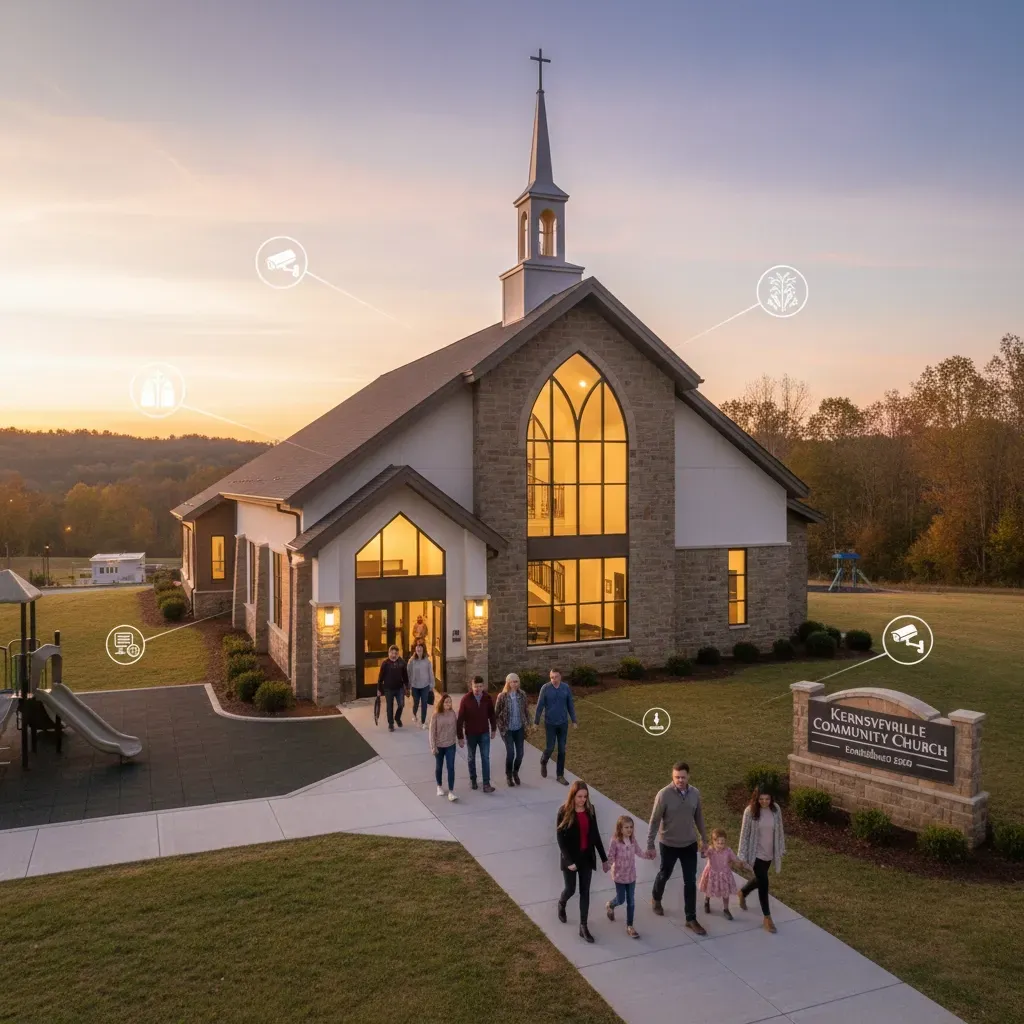
Let's be honest: this question shouldn't have to be asked, but here we are. And if you're asking it, you're already being wise. Whether you're new to Kernersville, new to faith, or just looking for a church home where you can actually feel... well, safe, this conversation matters more than ever. I've been pastoring for over a decade now, and I've seen both sides of this coin. I've watched churches get security spectacularly wrong, and I've seen what it looks like when a church creates genuine safety, not just the kind that keeps bad guys out, but the kind that lets hurting people in. So let's talk about what real church safety looks like and what you should be looking for when you're church shopping in our little corner of North Carolina. Physical Safety: More Than Just Locks and Cameras Here's what I wish someone had told me when I started in ministry: church security isn't about creating a fortress, it's about creating a haven. There's a big difference. A truly secure church should have done its homework. They should have conducted a security risk assessment, covering everything from their building layout to how they handle money on Sundays. So, here is what to look for: Are there greeters who clearly know what they're doing beyond just saying hello? Do they have adequate lighting in the parking lot? (Trust me, this matters more than you think.) Are doors managed well, meaning they know which ones should be locked and which ones shouldn't? Is there a communication system in place for emergencies? The parking lot is actually a big deal. I know it sounds weird, but criminals know that during church services, cars are left unattended for an hour or more at predictable times. A good church pays attention to this stuff. Some churches hire professional security services. Others train volunteers with law enforcement or military backgrounds. Both can work great; what matters is that someone's actually thinking about it. Emotional and Spiritual Safety: The Harder Conversation Okay, here's where it gets real. Physical safety is the easier part. Emotional safety? That's where churches often struggle, and honestly, it's where the real damage happens. I remember talking to a woman who told me, "Josh, I've been hurt by churches before. How do I know this place is different?" That question broke my heart and made me realize we needed to do better at showing, not just saying, that we're a safe place for broken people. Red flags to watch for: Leadership that never admits mistakes or shows vulnerability Preaching that sounds like "we're right, everyone else is wrong" all the time An absence of support ministries for real-life struggles Green flags to look for: Pastors who talk about their own failures and growth Support groups for grief, divorce, addiction, or other life challenges Leadership that includes diverse voices and perspectives Teaching that's more about "here's what Scripture says" and less about "here's why we're better than them" Before you ever step foot in a church building, there is an easy and effective way to learn more about them. Spend some time on its website. Listen to a few sermons online. Do they sound like people you'd want to have coffee with? Do they talk about helping hurting people, or do they mostly talk about how awesome their church is? Is the Bible a consistent focus during teaching? Are the messages relatable? Leadership Structure: Character Over Charisma This might be the most important thing I tell people: don't choose a church based on how polished the pastor's preaching is. I know a pastor who can make the phone book sound inspiring, but his church is an emotional disaster zone because he's never learned to say "I was wrong." Look for leaders who demonstrate the "fruit of the Spirit": love, joy, peace, patience, kindness, goodness, faithfulness, gentleness, and self-control (Galatians 5:22-23). These aren't optional character traits for church leaders; they're non-negotiables. Pay attention to how disagreements are handled. Every church has them; what matters is whether they're handled with grace or with pride. A healthy church can have people who disagree about secondary issues while still loving each other well. Child Protection: Non-Negotiable Territory If you have kids, this should be one of your first questions. And even if you don't have kids, how a church protects children tells you everything about their values. Churches should have clear policies about background checks, two-adult rules in children's areas, and transparent procedures for reporting concerns. If they get defensive about these questions or act like asking is somehow distrustful, that is a red flag. At Passion Church, we're actually grateful when parents ask these questions because it shows they're engaged and protective. That's exactly what we want. Our kids' ministry operates with full transparency because children's safety isn't negotiable. The Practical Stuff: How to Actually Evaluate Here's my advice when looking at a church to attend from this perspective: Start online. Spend 30 minutes on their website. What do they emphasize? What do they barely mention? Do they sound like people you'd want to know? Listen to sermons. Most churches post them online now. Listen to 2-3 recent messages. How does the pastor handle Scripture? How does he talk about people who disagree with him? Does he sound humble or arrogant? Visit slowly. Don't feel pressured to jump in with both feet. Visit a few times, attend different types of gatherings, talk to regular people (not just the staff). Ask good questions: What's your church's approach to people who are struggling? How do you handle disagreements within the leadership? What support do you offer for people going through difficult seasons? Can you tell me about your security procedures? What Safety Looks Like at Passion Church I'm obviously biased, but I think we've learned some things about creating genuine safety over the years. We've got trained volunteers who help with security, & uniformed officers at every service, but they're also the same people who'll help you find the bathroom or get your kids checked in. We believe safety means creating space for people to ask hard questions, struggle with doubt, and work through real-life problems without judgment. It means having clear policies that protect everyone, especially the vulnerable. Most importantly, it means understanding that church isn't supposed to be a place for perfect people; it's supposed to be a hospital for broken people. If you're looking for perfect, you're going to be disappointed. If you're looking for an authentic, grace-filled community where you can grow and heal, well, that's what we're shooting for. Your 10-Minute Daily Challenge Here's something you can start today: spend 10 minutes each day this week researching one church in the Kernersville area. Look up their website, listen to part of a sermon, read their values or beliefs page. Don't worry about making a decision yet: just start getting familiar with what's out there. By the end of the week, you'll have a much better sense of which churches might be worth visiting in person. The goal isn't to find the perfect church (spoiler alert: it doesn't exist), but to find a place where you can be known, loved, and challenged to grow in your faith. Come Check Us Out Look, I'd love for you to visit Passion Church, but more than that, I want you to find a church home where you can thrive and grow closer to Jesus Christ. If that's us, awesome. If it's not, I genuinely hope you find what you're looking for. But if you want to see what we're about, come join us this Sunday at either 9:30am or 11:00am . We'll be the ones trying to create the kind of place we'd want our own families to attend: safe, authentic, and full of grace. We are located at 612 Edgewood Street, Kernersville NC, 27284. You're not just welcome here, you're wanted. Come as you are, questions and all. Let's figure out this faith thing together.

Local Church Events for families You Can’t Miss in Kernersville Looking for local church events near me in Kernersville? At Passion Church, we believe church is more than a Sunday service—it’s a community where people of all ages (even goofy ones) can grow, connect, and make a difference. That’s why throughout the year, we host events designed to help you build relationships and experience the love of Jesus in real ways. Weekly Gatherings You’ll Love Sunday Services (9:30 & 11:00 AM) – Two opportunities to worship with passionate music, practical teaching, Kids Church, and a youth small group Bible study during the second service. Kids Church (both services) – A fun, safe place where children journey through the entire Bible every three years , learning God’s truth from start to finish. Youth Small Group (11:00 AM) – Middle and high school students meet for Bible study and real-life discussions while adults are in service. Small Groups for Adults – Whether weekly or monthly, small groups are a great way to build relationships and grow in faith. At Passion Church, groups meet at different times to fit your schedule: Sunday afternoons or evenings Monday evenings Thursday nights Monthly or bi-monthly on Friday nights or Saturday mornings Special Events Throughout the Year Passion Church is known for creating opportunities where the whole community can gather. Some highlights include: Baptism Sundays – Every third Sunday of the month , we celebrate new life in Christ through water baptism. Family Fun Days – Food, games, and activities designed to bring people together. Holiday Services – Christmas and Easter services filled with hope, joy, and community. Church Anniversary Celebration (August 25th) – Every year we celebrate what God has done in and through Passion Church with worship, fellowship, and joyful celebration. Church Fellowship Meals – Throughout the year, we host regular gatherings for the church to share meals together, build community, and enjoy time as a church family. Community Outreach Events – Service projects, food drives, and local partnerships where we share the love of Jesus beyond our walls. A Safe and Welcoming Environment At every event, safety and hospitality are top priorities. Our robust safety team —including a uniformed police officer on-site each Sunday —helps ensure peace of mind for families. Kids check-in is secure, with unique matching name tags for every parent and child , so your family is always cared for. Come as You Are Whether it’s a Sunday morning or a special event, there’s no dress code. At Passion Church, you’ll see everything from full suits to shorts and flip flops. Pastor Josh Tufte usually preaches in jeans and a t-shirt. The goal isn’t what you wear—it’s that you come ready to encounter Jesus and build meaningful relationships. Stay Up to Date on Events Want to know what’s happening this month at Passion Church? From kids’ events to adult gatherings, there’s always something going on. Check out our Events Page for the latest updates on upcoming opportunities to connect, serve, and grow. Not Just Welcome—Wanted Here Some churches or events may say you’re welcome but don’t go out of their way to make you feel at home. At Passion Church, it’s different. You’re not just welcome here—you’re wanted here. We love growing, meeting new people, serving together, adding new small groups, and seeing new faces at every event. We genuinely love people and want anyone who is interested to join us as we follow after Jesus Christ. Join Us at Passion Church If you’re searching for local church events in Kernersville that are safe, family-friendly, and centered on God’s Word, Passion Church has a place for you. 📍 Passion Church – Kernersville, NC 🕘 Service Times – Sundays at 9:30 AM & 11:00 AM Come early, grab some coffee and snacks, and connect with people who will make you feel right at home.

Sunday Service Times in Kernersville: What to Expect at Passion Church If you’re searching for a church near me in Kernersville or looking for a welcoming, Bible-based community for your family, Passion Church is here for you. Whether you’re brand new to faith or have followed Jesus for years, we want Sundays to be the best day of your week. When We Meet We gather every Sunday at two service times designed to fit your schedule: 9:30 AM & 11:00 AM Each service lasts about 60-75 minutes and includes modern worship, practical Bible teaching, and ministry opportunities for every age group. Come Early for Coffee, Snacks, and Community We encourage you to arrive a little early! Every Sunday, we provide coffee and light snacks so you can relax, meet new people, and build friendships. At Passion Church, we believe church isn’t just about attending a service—it’s about belonging to a family. Kids Church – Growing in God’s Word We believe kids aren’t just the church of tomorrow—they’re the church of today. That’s why Kids Church happens during both services, designed for infants through 5th grade. Engaging worship and Bible lessons taught on their level A curriculum that takes kids through the entire Bible every three years, giving them a big-picture view of God’s story Fun activities in a safe, caring environment led by trained volunteers Safe and Secure Kids Check-In The safety of every child matters deeply to us. That’s why our kids’ check-in system gives each child and parent a unique matching name tag every Sunday. Parents keep their tag and must show it when picking up their child, ensuring your child is always released safely and securely. A Safe Place for Your Family Passion Church is committed to providing a safe environment for everyone who walks through our doors. Each Sunday, our robust safety team is on site, alongside a uniformed police officer, to ensure the protection of our children, families, and guests. You can worship with peace of mind knowing your loved ones are cared for. Youth Small Group – Bible Study & Discussion Middle and high school students have a special opportunity during the 11:00 AM service. While adults are in the main worship service, teens gather for a youth small group Bible study and discussion. Real conversations about faith and life Guided Bible study that helps students apply God’s Word A safe space to ask questions and build friendships What to Wear One of the questions people often ask before visiting a new church is, “What should I wear?” At Passion Church, the answer is simple: come as you are. Most of our church family dresses casually—jeans, t-shirts, or whatever makes you comfortable. You’ll also see some people dressed in full suits and others in shorts and flip flops. Our pastor, Josh Tufte, typically preaches in jeans and a t-shirt. We care far more about you than what you wear. So whether you’re dressed up or dressed down, you’ll fit right in. What to Expect on Sundays From the moment you arrive, you’ll be greeted by friendly volunteers who are ready to make you feel at home. Here’s what a typical Sunday looks like: Welcoming atmosphere – Coffee, snacks, and people eager to connect. Passionate worship – Our band leads with modern, Christ-centered music. Relevant teaching – Pastor Josh preaches directly from the Bible in a way that applies to everyday life. Community – Opportunities to connect, serve, and grow are available every week. Why People Choose Passion Church in Kernersville There are many Kernersville churches, but people choose Passion Church because: We’re committed to preaching and teaching God’s Word. We’re a community of authentic people striving to follow Jesus. We provide ministries for the whole family—kids, teens, and adults. We prioritize safety so you can focus on worship without worry. We believe the church should be filled with hope, joy, and real relationships. More Than Welcome — You’re Wanted Here Some people and places may say they want to meet you, that they wish you would come, but when you do, they don’t go out of their way to make you feel at home. At Passion Church, it’s different. You’re not only welcome here, you’re wanted here. We love growing, meeting new people, serving alongside others, adding new small groups, and seeing new faces every Sunday. More than anything, we genuinely love people and want anyone who is interested to join us as we follow after Jesus Christ. Join Us This Sunday If you’re looking for a Kernersville church that’s passionate about Jesus, welcoming to families, committed to God’s Word, and intentional about creating a safe, joyful environment, we’d love to meet you this Sunday. 📍 Passion Church – 612 Edgewood St. Kernersville, 27284 NC 🕘 Service Times – Sundays at 9:30 AM & 11:00 AM Come early, grab some coffee, connect with others, and experience a church where you truly belong.

How I Write My Sermons One of the questions I get asked most often as a pastor is: “How do you write your sermons each week?” The truth is—it’s a process filled with study, prayer, creativity, and a lot of time staring at a blank page asking the Holy Spirit to lead me. In this post, I want to pull back the curtain a little bit. Sermon preparation isn’t some mystical thing that just happens magically, and it’s definitely not something that can be accomplished in 30 minutes. It takes intentional time and focus to hear God’s voice, understand His Word, and prepare to share it faithfully. I usually aim to spend 15–18 hours a week preparing my sermons. But the reality is that ministry life is busy, and often I end up with closer to 8–10 hours of prep time. Whether it’s on the longer or shorter end, I’ve learned to trust that God can multiply the hours I give Him. Here’s a look at what my typical week of sermon prep looks like: 1. Research (1–3 Hours) The first step for me is always diving into the Word itself. I’ll spend 1–3 hours digging into the passage, studying the original language, exploring cultural and historical references, and looking at the context around the story. This deep understanding of Scripture is what allows me to be more easily led by God into the message He has for Passion Church in Kernersville. When I know the subject, timeline, or history well, I find that God can work more broadly than if I’m walking in unprepared and ignorant. Preparation gives God room to expand the message. I’ve also found that the more I prepare, the freer I become when preaching. A personal goal for me is to use my notes as a reference, not a crutch. The deeper I know the material, the less I have to rely on reading my notes word-for-word, which leaves more space for the Spirit to move in the moment. 2. Learning from Others (2–4 Hours) After that, I usually spend 2–4 hours watching other pastors preach on similar passages or themes. It’s worth noting: at Passion Church, we draw a significant amount of inspiration for sermons and series from other churches, and we recommend that others do the same—with permission and proper referencing. A great example is Life.Church’s Open Church Resource, which provides free sermon series, graphics, and a wealth of resources to support local churches. Now, I don’t recommend stealing an entire church’s series and replacing your prep with their work. Nor do I recommend following someone else’s script word-for-word, because that can remove room for the Spirit to lead. But inspiration can come from others—and God can absolutely use their work to spark something new in you. You never know how He may choose to work through the Body of Christ. 3. Prayer, Worship, and Reflection (2–4 Hours) A big part of sermon prep for me is not just information, but transformation. I have to let the message work in me before I can share it with you. That means I’ll spend 2–4 hours in prayer, worship, and reflection, asking God to show me what He wants to say to Passion Church this week. During this time, I also go back through my notes and manuscript, reading them aloud. Doing this while praying and worshiping helps calm my mind, keeps my heart centered on God, and cements everything into place before I step on stage. 4. Practice, Editing, and Refining On weeks when I have more time, I’ll split extra hours between practicing the delivery, watching more sermons for inspiration, and spending even more time in prayer and worship. I also personally find that editing my jokes takes up a significant amount of time. The more I prepare, the shorter my sermons usually run and the more “acceptable” my jokes become. Humor is a big part of preaching for me. I believe God loves me in spite of me—and that’s a reason to be joyful! Because of that, many of my sermons include intentional humor. Our relationship with God should absolutely be one of respect, love, and submission, but it should also be full of humor and joy. For me, preaching isn’t just about content—it’s about carrying the presence of God and making His Word come alive for people. 5. Using Helpful Tools Something that has surprised me in recent years is how helpful AI tools have become in this process. I use AI for research, organization, and even structuring my thoughts. It’s not a replacement for the Spirit’s leading (and it never will be), but it has helped me use my time more effectively so I can spend more of it in prayer and preparation. At the end of the day, sermon writing is not just about crafting words—it’s about hearing from God and faithfully communicating His truth. Whether I spend 18 hours or 8 hours preparing, I remind myself of Jesus’ words: “Apart from me, you can do nothing.” (John 15:5) That’s why every sermon begins and ends with dependence on Him. Looking for a Church in Kernersville? If you’ve been searching online for a church near me in Kernersville, exploring Kernersville churches, or simply wondering about Christian churches near me, we’d love to invite you to Passion Church in Kernersville. We’re a community of authentic people doing our best to follow after Jesus Christ. Every message is preached and taught from God’s Word, and every service is designed to help you take your next step with Him. Join us in person or online for one of our services—you’ll find a welcoming atmosphere, meaningful worship, and teaching rooted in Scripture. 👉 Learn more at www.passionchurchnc.com/PlanYourVisit